Running a small hotel or B&B means every booking counts. But with travelers booking more on mobile, OTAs taking 15–20% commissions, and guest expectations higher than ever, the booking system you choose can make or break your business.
Table of Contents
The right system will save you time on admin, increase direct bookings, and deliver a smoother experience for your guests. In this guide, we compare the best booking systems for small hotels and B&Bs in 2025 — so you can pick the one that fits your property.
If you’re not sure how to choose the right system for your property, see our guide: How to Choose the Right Hotel Management System in 2025.
Why Booking Systems Matter for Small Hotels & B&Bs in 2025
💬 Real Experience
When I worked reception in a small hotel in the South of France, we sometimes paid more than 15% commission to Booking.com just to appear higher in search results. It was a constant reminder that the platforms controlled our margins, not us.
Mobile has become the dominant booking channel. ProStay found that 60% of hotel reservations in 2024 were made via mobile devices (ProStay), while SiteMinder reports that mobile now represents 35% of hotel booking revenue (SiteMinder). If your system isn’t mobile-friendly, you’re losing guests.
- OTA commissions eat into profit. A $150 average booking on Booking.com at 15% commission = $22.50 lost each time.
- Independent hoteliers wear many hats. A good system reduces admin and frees you up for guest experience.
If you are weighing up simplicity against budget-firendliness, check out the Little Hotelier vs eZee Absolute (2025) comparison.
For a deeper look at why direct bookings matter — and how to reduce OTA commissions — see our guide: How to Increase Direct Hotel Bookings in 2025.
Bottom line: Investing in the right system isn’t a cost — it’s a revenue and time multiplier. To understand why mobile optimization plays such a big role, see Why Mobile-Friendly Booking Systems Are Essential for Small Hotels in 2025.
Must-Have Features in a Small Hotel Booking System (2025)
Before diving into reviews, here are the must-have features:
- Mobile-first booking engine → stop abandoned reservations.
- Channel manager → sync OTAs + direct bookings automatically.
- Payment processing → credit cards, Apple/Google Pay, PayPal.
- Guest communication → automated confirmations, reminders, upsells.
- Reporting & analytics → occupancy, ADR, RevPAR, OTA mix.
- Multi-language support → especially important in Europe & global markets.
- Reliable support → 24/7 help for small teams.
- Mobile management access → most systems now offer apps or dashboards so managers can handle reservations, check-ins, and guest messages on the go.
Choosing the right system isn’t about chasing every feature on the market — it’s about focusing on the tools that solve your daily headaches. For most small hotels and B&Bs, that means stopping double-bookings, making online payments easy, and cutting down the admin that takes time away from guests. If a provider covers these essentials and backs them up with reliable support, you’ll already be ahead of many competitors.
Most modern platforms combine a PMS, a booking engine, and a channel manager. If you’re not sure how these tools differ, see our guide: PMS vs Booking Engine vs Channel Manager: What Small Hotels Really Need (2025).
Some platforms focus on automated dynamic pricing, while others rely on manual rate strategy supported by market insights. For a practical explanation of how these approaches differ, see our guide to dynamic pricing for small hotels.
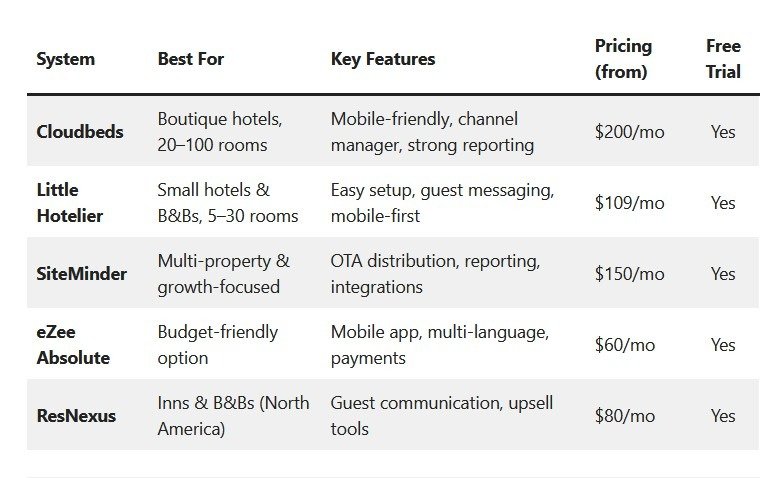
Small Hotel Booking Systems Compared (2025)
| System | Best For | Key Features | Pricing (from) | Free Trial |
|---|---|---|---|---|
| Cloudbeds | Boutique hotels, 20–100 rooms | Mobile-friendly, channel manager, strong reporting | $200/mo | Yes |
| Little Hotelier | Small hotels & B&Bs, 5–30 rooms | Easy setup, guest messaging, mobile-first | $109/mo | Yes |
| SiteMinder | Multi-property & growth-focused | OTA distribution, reporting, integrations | $150/mo | Yes |
| eZee Absolute | Budget-friendly option | Mobile app, multi-language, payments | $60/mo | Yes |
| ResNexus | Inns & B&Bs (North America) | Guest communication, upsell tools | $80/mo | Yes |
Individual Reviews
Cloudbeds — Best for Boutique Hotels (20–100 Rooms)
Overview
Cloudbeds is a leading all-in-one property management and booking platform. Unlike tools built only for reservations, Cloudbeds combines booking, channel management, payments, and reporting into a single system. It’s trusted by thousands of independent hotels worldwide, making it a top choice for boutique hotels and growing properties with 20–100 rooms.
💬 Real Experience
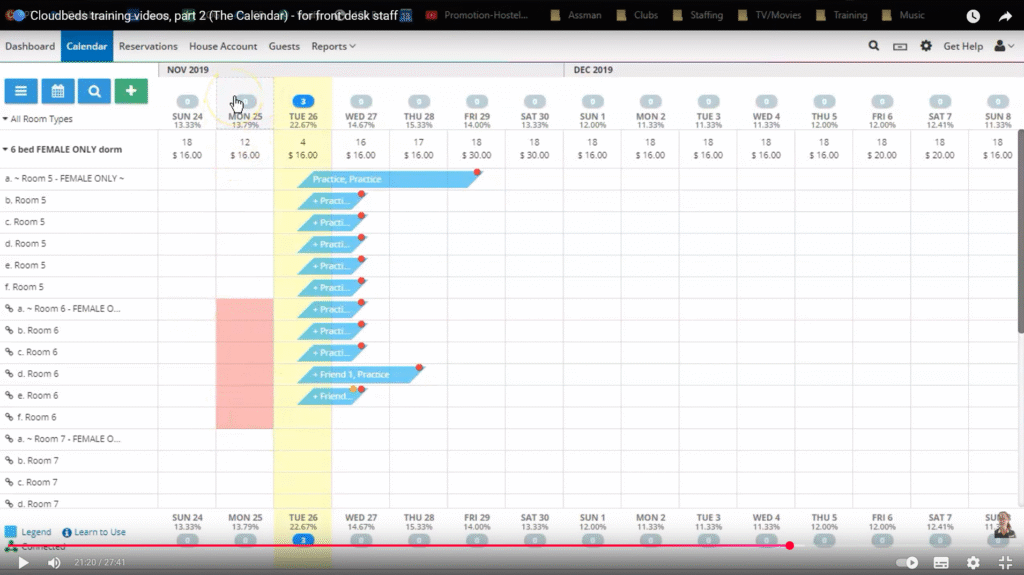
When I worked reception, the morning close-out was one of the most stressful parts of the day. If the night staff had mis-entered even a single booking, reconciling everything could take hours — all while guests were already queuing to check out. Cloudbeds automates these reconciliations in real time, saving staff from exactly the kind of chaos I used to face.
Key Features
- Mobile-friendly booking engine with customizable branding.
- Powerful channel manager that syncs with 300+ OTAs, including Booking.com, Airbnb, and Expedia.
- Comprehensive reporting (occupancy, ADR, RevPAR, OTA ratio).
- Integrated payments with fraud prevention and multiple currencies.
- Tools for guest messaging, upsells, and reviews management.
- Marketplace with 100+ integrations (POS systems, revenue managers, accounting).
Strengths
- One of the most feature-rich platforms available for independents.
- Strong global presence — works well in multiple languages and currencies.
- Excellent for multi-property management.
- Advanced reporting helps owners make smarter revenue decisions.
- Scales easily as a hotel grows — from 20 rooms to multiple properties.
Weaknesses
- Steeper learning curve than simpler platforms like Little Hotelier.
- Pricing starts higher than most competitors.
- Best suited for properties with dedicated staff, not one-person operators.
Best For
- Boutique hotels with 20–100 rooms.
- Independent operators looking for enterprise-level tools without the complexity of a chain system.
- Properties with international guests that need multi-language/currency support.
Pricing
Plans typically start around $200/month, with costs scaling based on property size and feature selection. A free demo is available.
👉 Check out Cloudbeds official site.
Verdict
Cloudbeds is a powerhouse solution for boutique hotels that want to streamline operations, boost direct bookings, and manage multiple distribution channels effectively. While it takes a little time to learn, the payoff is huge: fewer admin headaches, more revenue control, and a professional guest experience from booking to checkout.
Read our full Cloudbeds Review for a detailed breakdown of its features, pricing, and key advantages.
Little Hotelier — Best for Small Hotels & B&Bs
Overview
Little Hotelier is one of the most popular booking systems designed specifically for small hotels, inns, and B&Bs. Unlike bigger platforms built for chains, it focuses on simplicity and ease of use — perfect if you’re running a property with 5–30 rooms and want to spend less time on admin.
💬 Real Experience
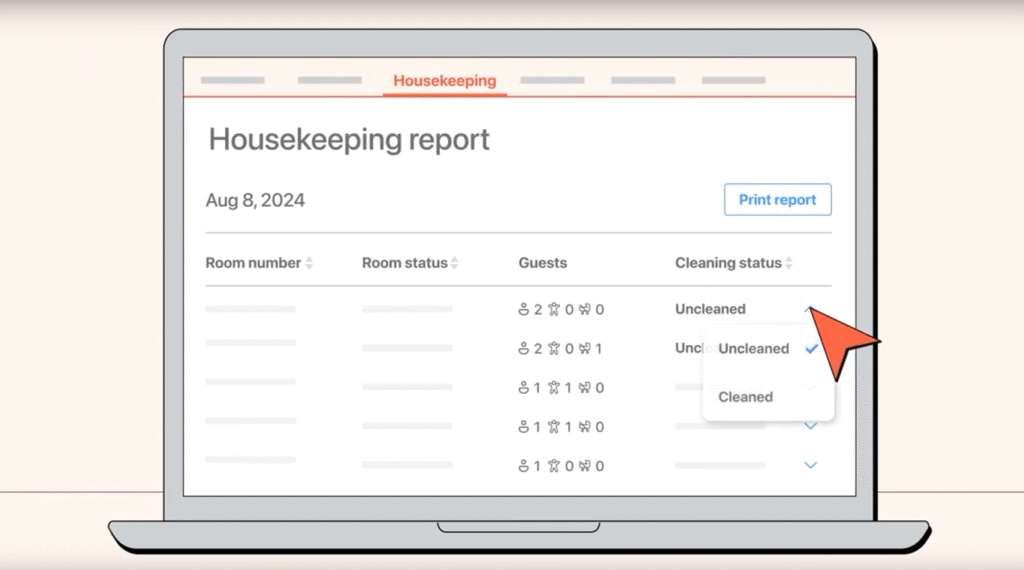
In my hotel days, late check-outs were a constant headache — cleaners would wait around, and new guests often arrived to rooms not yet ready. Little Hotelier’s housekeeping tools update room status in real time, meaning staff always know which rooms are available and which still need attention. It’s exactly the kind of feature that would have saved us endless phone calls and frustration.
Key Features
- Mobile-first booking engine that looks good on phones and tablets.
- Built-in channel manager to sync with OTAs like Booking.com and Expedia.
- Guest communication tools (automatic confirmations, pre-arrival emails, upsell offers).
- Payment processing with credit cards and digital wallets.
- Dashboard for basic reporting on occupancy and revenue.
Strengths
- Extremely easy setup (many owners are live within a day).
- Interface designed for non-technical users — minimal training needed.
- Strong customer support, with phone and email help available.
- Integrates well with most OTAs, while encouraging direct bookings.
Weaknesses
- Reporting is more limited compared to platforms like Cloudbeds.
- May feel too “simple” if you manage multiple properties or want advanced revenue analytics.
- Pricing is higher than budget competitors like eZee Absolute.
Best For
- Independent B&Bs and small hotels with fewer than 30 rooms.
- Owners who want a “plug-and-play” system without a steep learning curve.
- Operators focused on reducing OTA dependency and growing direct bookings.
Pricing
Starts around $109/month, depending on property size and feature package. A free trial is available.
👉 Visit Little Hotelier site to learn more.
Verdict
If you’re running a small property and want a simple, reliable, and mobile-friendly booking system, Little Hotelier is hard to beat. It’s not the cheapest, but the time saved and the boost in direct bookings can quickly cover the cost.
For a closer look at Little Hotelier’s tools and pricing, see our complete review.
Want to know how Little Hotelier compares to Cloudbeds? Check out our article Cloudbeds vs Little Hotelier: Best for Small Hotels & B&Bs.
SiteMinder — Best for Growth-Focused Hotels & Multi-Property Owners
Overview
SiteMinder is one of the most recognized names in hotel technology, best known for its powerful channel manager and distribution tools. While it also includes booking engine and property management features, its real strength is helping hotels maximize visibility across multiple sales channels. For independent boutique hotels that want to scale or manage multiple properties, SiteMinder is a top contender.
💬 Real Experience
One of my regular tasks as a receptionist was entering guest invoice figures into Excel so management could see basic reports. In the off-season, it was easily done — there were fewer guests and plenty of time. But in high season, when the hotel was full and every minute at the desk mattered, it often became a race with time. SiteMinder automates this kind of reporting, so owners and managers get the figures they need instantly without staff losing hours on manual data entry.
Key Features
- Channel manager connecting with 450+ OTAs worldwide.
- Booking engine that integrates into hotel websites.
- Revenue insights dashboard with real-time performance metrics.
- Payment solutions with global currencies and fraud protection.
- Marketplace of integrations (POS, PMS, CRM, accounting).
- Multi-property management features.
Strengths
- One of the best channel distribution systems available — minimizes overbookings.
- Global reach — particularly strong if you attract international guests.
- Flexible integration marketplace makes it easy to connect third-party tools.
- Strong reporting on booking sources and revenue trends.
Weaknesses
- More complex than lightweight systems like Little Hotelier.
- Strongest in distribution; PMS features are not as deep as Cloudbeds.
- Pricing may be high for very small properties.
Best For
- Hotels with multiple distribution channels (Booking.com, Expedia, Airbnb, regional OTAs).
- Properties planning to scale beyond one location.
- Owners who want robust analytics on where bookings are coming from.
Pricing
Pricing typically starts around $150/month, scaling with features and property size. Free trial/demo available.
👉 Check pricing on SiteMinder site.
Verdict
SiteMinder is ideal for growth-focused independent hotels and multi-property owners who want to maximize reach and efficiency. Its distribution strength makes it a must-have for operators aiming to compete with larger chains while staying independent.
See our in-depth SiteMinder Review for full details on setup, features, and support.
eZee Absolute — Best for Budget-Conscious Hotels & B&Bs
Overview
eZee Absolute is a cloud-based hotel management system that focuses on affordability and accessibility. It’s widely used in Asia, Africa, and Europe, making it a solid choice for international operators or budget-conscious small hotels and guesthouses. While it doesn’t have the polish of premium platforms like Cloudbeds, it delivers strong functionality at a lower price point.
That trade-off — lower price for less polish — makes eZee a realistic option for small hotels that need essential booking tools without stretching their budget. It’s not the flashiest system, but for many operators in developing or price-sensitive markets, it gets the job done.
Key Features
- Booking engine with mobile compatibility.
- Channel manager connecting to major OTAs.
- Mobile app for owners and staff (manage reservations from anywhere).
- Payment processing with local and international methods.
- Multi-language & multi-currency support (particularly strong for global users).
- Reporting tools for occupancy, revenue, and guest history.
Strengths
- One of the most affordable full-featured systems on the market.
- Strong multi-language and multi-currency support, ideal for international guests.
- Mobile app helps owners manage bookings on the go.
- Scalable — can handle small B&Bs or larger mid-sized hotels.
Weaknesses
- User interface is less modern compared to Cloudbeds or Little Hotelier.
- Customer support is less consistent depending on region.
- Reporting and analytics are more basic than premium competitors.
Best For
- Small hotels, inns, and B&Bs with tight budgets.
- Properties outside North America that need multi-language/currency support.
- Owners who want solid functionality without premium pricing.
Pricing
Plans start around $60/month, making it one of the cheapest options with channel management included. A free trial is available.
👉 Learn more about eZee Absolute.
Verdict
eZee Absolute is a practical, no-frills choice for hoteliers who want to upgrade from spreadsheets or manual calendars without spending heavily. It’s not as sleek as higher-end systems, but for budget-conscious operators, it gets the job done.
Discover whether eZee Absolute could be a better fit for your property in our detailed review coming soon.
ResNexus — Best for Inns & B&Bs in North America
Overview
ResNexus is a property management and booking system built with innkeepers and B&B owners in mind. Based in the U.S., it’s especially popular among small independent operators who want straightforward booking tools combined with strong guest communication features. While its global reach is more limited than Cloudbeds or SiteMinder, ResNexus shines in the North American market.
This regional focus is its strength: rather than trying to serve every type of property worldwide, ResNexus tailors its features to the needs of B&Bs and inns across North America, giving it a loyal following in that niche.
Key Features
- Booking engine with customizable branding.
- Channel manager for OTAs like Booking.com and Expedia.
- Strong guest communication tools (email, text reminders, thank-you notes).
- Upsell options — add breakfast, packages, or extras at checkout.
- Reporting on occupancy, revenue, and booking sources.
- Integrated marketing tools (newsletters, loyalty programs).
Strengths
- Tailored for B&Bs and small inns, not just large hotels.
- Excellent guest communication features — helps reduce no-shows.
- Upselling tools built in, increasing per-guest revenue.
- Strong support team familiar with small business needs.
Weaknesses
- Less suitable for international users (focus is mainly U.S. and Canada).
- Interface feels less modern than Cloudbeds or Little Hotelier.
- Fewer third-party integrations compared to global competitors.
Best For
- Independent B&Bs and inns in North America.
- Owners who want a “high-touch” system with communication and upsell features.
- Operators who value marketing add-ons like newsletters and loyalty tools.
Pricing
Plans start around $80/month, with add-ons for advanced features. Free demo available.
Verdict
ResNexus is a solid choice for North American innkeepers and B&B owners who want to improve guest communication and increase revenue through upsells. While not as global or advanced as Cloudbeds, it offers a practical and supportive solution tailored to the needs of smaller hospitality businesses.
Learn more about ResNexus’ property management tools and how they support small hotels and inns in our full review.
Hotel Booking System Costs: What Small Hotels Can Expect
- Budget-friendly options (eZee Absolute, ResNexus) start around $60–80/month.
- Mid-tier (Little Hotelier, SiteMinder) around $100–150/month.
- Premium (Cloudbeds) starts at $200+.
Remember: saving just a handful of OTA commissions can cover the monthly cost of any system.
Tip: If minimizing costs are high on your agenda, our guide on how to boost your direct bookings organically details steps you can take to increase direct bookings organically without advertising.
Best Booking Systems for Small Hotels & B&Bs: Our Picks
- For B&Bs (5–20 rooms): Little Hotelier, ResNexus.
- For boutique hotels (20–100 rooms): Cloudbeds, SiteMinder.
- For budget-conscious properties: eZee Absolute.
Pick the system that matches your size, budget, and growth goals.
Final Thoughts: Choosing the Right Booking System for Your Property
In 2025, mobile-friendly, integrated booking systems are no longer optional — they’re the baseline for success. Whether you run a cozy B&B or a growing boutique hotel, the right system reduces admin, boosts direct bookings, and improves your guest experience. Not sure where to start?
Our guide on Why Mobile-Friendly Booking Systems Are Essential for Small Hotels in 2025 shows you exactly what to look for and which providers deliver the best mobile experience.
For a deeper look at scalability and growth potential, see Cloudbeds vs SiteMinder: Which System Scales Better for Growing Hotels?
Beyond features and pricing, don’t overlook security — it’s a key factor in guest trust. Learn more in How Modern Hotel Booking Systems Keep Guest Data Secure.
Ready to choose? Explore free trials and demos from our recommended booking systems today.
For in-depth reviews and all current system comparisons, visit our Hotel Booking System Reviews (2025) hub — it brings together every review, comparison, and key guide in one place so you can evaluate each option more confidently.
Things to Watch Out For in Hotel Booking Systems
Not every “all-in-one” booking system lives up to its promises. Here are the red flags to look out for when evaluating providers:
1. Pricing Hidden Behind Demos
If a system doesn’t list prices upfront, it usually means:
- Costs vary depending on property size (and vendors may charge more if they think you can pay).
- They want you on a sales call before you realize the true cost.
💡 Tip: Transparent pricing builds trust. Be cautious if everything is hidden behind “book a demo.”
2. “Unlimited” That Isn’t Unlimited
The fine print matters.
- “Unlimited users” may mean only one can log in at a time.
- “Unlimited bookings” sometimes excludes OTA connections (which can carry extra fees).
💡 Tip: Translate marketing claims into practical reality — ask exactly what “unlimited” covers.
3. Extra Fees for Essentials
Some providers charge add-ons for what you’d expect to be included:
- Training and onboarding calls.
- 24/7 support instead of just office hours.
- Payment processing integrations.
💡 Tip: Always clarify whether “all-in-one” really means all included.
4. Support Quality
“24/7 support” often just means email ticketing. Real-time chat or phone support may be extra. And response times aren’t always published.
💬 Real Experience: When I worked reception, even a short system outage could mean a line of frustrated guests. Fast support wasn’t optional — it was survival.
5. Lack of Exit Options (Data Portability)
If you ever leave the system, can you easily take your reservation history and guest data with you? Some vendors make exporting data difficult, effectively locking customers in.
💡 Tip: Ask vendors directly: “Can I export all my data if I switch?”
6. Speed & Mobile Usability
Every provider says they’re “mobile-friendly,” but there’s a difference between a true mobile app and a clunky web interface squeezed onto a phone screen.
💬 Real Experience: I’ve seen how painful a slow PMS can be at check-in with guests waiting. Every second matters when a lobby is full.
7. Integrations Vague or Limited
Some systems promise “hundreds of integrations,” but in reality many are shallow or broken.
💡 Tip: Look for specifics: does it work with your accounting system (QuickBooks, Xero), your POS, and your housekeeping app?
Bottom line: Look beyond the glossy features. Transparency, support quality, and flexibility matter just as much as price.
FAQs About Small Hotel & B&B Booking Systems
Q: What’s the best hotel booking system for small hotels & B&Bs in 2025?
A: The best system depends on your property’s needs. Cloudbeds and SiteMinder are strong for full-featured hotels, while Little Hotelier is popular with B&Bs. Compare features, pricing, and integrations before choosing.
Q: How much does a hotel booking system cost?
A: Most systems use monthly subscriptions. Expect around $50–$150/month for small hotels. Larger properties or premium plans can cost $300+/month. Always ask about setup fees and commission charges.
Q: What’s the difference between a PMS, booking engine, and channel manager?
A:
- A PMS (Property Management System) handles daily hotel operations.
- A Booking Engine lets guests book directly on your website.
- A Channel Manager syncs availability across OTAs like Booking.com and Expedia.
Many modern systems bundle these together.
Q: Can I integrate a booking system with my POS or accounting software?
A: Yes. Many platforms integrate with POS systems, payment gateways, and tools like QuickBooks or Xero. Look for systems with open APIs or app marketplaces for smoother integrations.
Q: Do hotel booking systems ever go down?
A: Outages are rare but possible. Good providers have backup systems or offline check-in features. Ask vendors about uptime guarantees and support response times.
Q: Can I switch booking systems easily if I’m not satisfied?
A: Most providers allow you to export guest data and reservations, but the process can be tricky. Switching often means staff retraining and some downtime. When choosing, ask vendors about their migration support and whether they help import old bookings into the new system.
Q: Do hotel booking systems work on mobile for staff?
A: Yes. Many systems have mobile apps or mobile-friendly dashboards so receptionists and managers can check availability, update rates, or manage check-ins from a phone or tablet. This flexibility is especially useful for small hotels where staff wear many hats.
Q: How long does it take to set up a booking system?
A: Basic setups can be ready in a day or two, but full customization — integrations with OTAs, POS, or accounting — may take 1–3 weeks. Good vendors offer onboarding support and training to make the process smoother.
Related Guides
- How Modern Hotel Booking Systems Keep Guest Data Secure
- How to Increase Direct Hotel Bookings in 2025
- PMS vs Booking Engine vs Channel Manager: What Small Hotels Really Need (2025)
- Why Mobile-Friendly Booking Systems Are Essential for Small Hotels in 2025
- Beyond OTAs: How to Diversify Your Booking Channels in 2025.