
The Problem of OTA Dependency
For small hotels, boutique inns, and B&Bs, every booking counts. But if you’re like many independent hoteliers, you probably depend heavily on online travel agencies (OTAs) like Booking.com, Expedia, or Agoda. While these platforms bring visibility, they also charge steep commissions — often 15–20% per booking. Over time, those fees eat away at your margins and leave you with less control over the guest relationship.
Table of Contents
The solution? Increase your direct hotel bookings. By driving more reservations through your own website, you keep more revenue, build stronger guest loyalty, and reduce dependence on third parties. In this guide, we’ll break down the real cost of OTA commissions, explain why direct bookings matter more than ever in 2025, and share practical strategies you can start using today.
The OTA Commission Trap
Let’s put the numbers into perspective.
- Average booking value: $150 per night.
- OTA commission: 15%.
- Commission cost: $22.50 gone — every single booking.
Now scale that up:
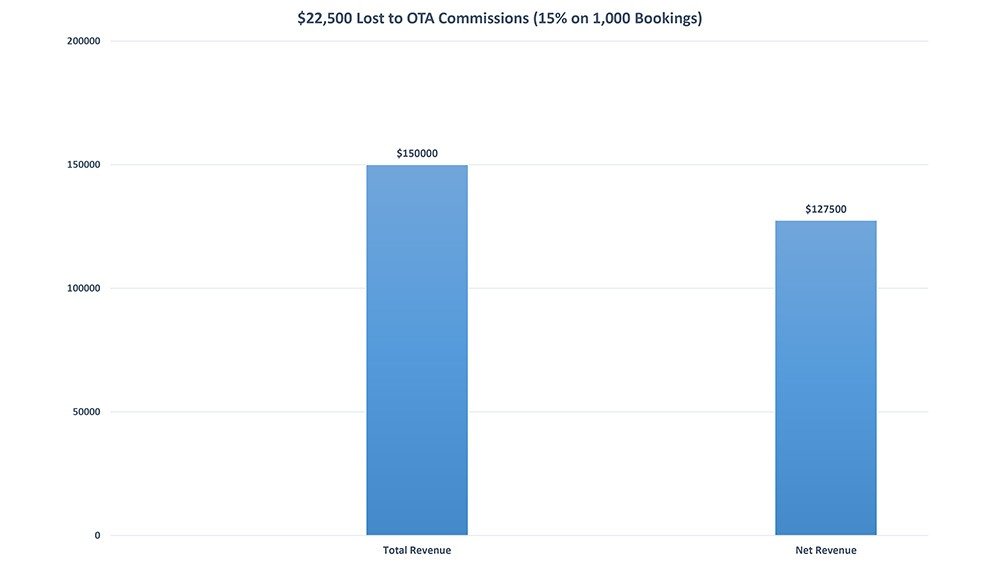
- 1,000 bookings per year × $150 average value = $150,000 in revenue.
- 15% commission = $22,500 handed to OTAs annually.
That’s money that could pay staff, fund renovations, or be reinvested into your marketing. For many small hotels, $20,000+ represents the difference between a tight year and a comfortable one.
And remember — some OTAs charge up to 20%, and additional “preferred placement” fees can push costs even higher.
💬 Real Experience
When I worked reception at a small hotel, management fell ill and the property hadn’t invested in its own website or booking software. To keep rooms filled during the busy summer season, we had to rely almost entirely on Booking.com — and the commission wasn’t just 15%. With late bookings and “preferred placement” options, we were paying closer to 22–23% on each reservation. Watching such a big slice of revenue disappear was painful, and it made clear how vulnerable small hotels can be without their own direct booking system.
Why Direct Bookings Matter
Relying too heavily on OTAs puts your business in a vulnerable position. Direct bookings, by contrast, give you:
Higher Profit Margins
Every direct booking means you keep 100% of the room rate, without sacrificing 15–20% in commissions.
Stronger Guest Relationships
When guests book through OTAs, you often receive limited contact information. Direct bookings let you collect guest emails, preferences, and feedback — the foundation of loyalty and repeat visits.
Upsell Opportunities
With a direct booking, you can offer extras like airport transfers, breakfast packages, spa treatments, or late checkout. These small upsells boost revenue and improve the guest experience.
Brand Loyalty & Word of Mouth
Direct bookers are more likely to return, especially if you provide perks or loyalty discounts. Even better, satisfied guests will recommend your hotel to friends and family — and word of mouth works best when people can book directly with you. If your only option is an OTA listing, that free marketing ends up helping the platform more than your hotel.
Strategies to Increase Direct Hotel Bookings in 2025
The hospitality landscape has shifted dramatically in recent years, with mobile-first browsing, AI-driven search, and hyper-competitive OTA marketing. To stay ahead, small hotels need a focused strategy. Here’s how you can capture more direct bookings in 2025:
1. Optimize Your Website for Mobile
On small screens, every second counts. If your booking flow isn’t fast-loading, responsive, and easy to use, you risk losing guests before they ever hit “confirm.”
A mobile-friendly booking engine is critical. Guests should be able to:
- Check availability instantly
- View real-time rates
- Complete payment securely in just a few taps
👉 According to ProStay, 60% (ProStay) of hotel reservations in 2024 were made via mobile devices, and SiteMinder (SiteMinder) notes that mobile already generates 35% of booking revenue. For a deeper dive into what this shift means — and which systems deliver the best experience — see our guide on mobile-friendly booking engines for small hotels in 2025.
Systems like Little Hotelier and Cloudbeds both provide responsive booking engines designed specifically for small properties.
2. Use Incentives for Direct Bookings
Why should a guest choose your site over Booking.com? Give them a clear reason. Even small perks can make the difference:
- 5–10% lower rates than OTAs (advertised as “best rate guarantee”).
- Free extras like breakfast, parking, or Wi-Fi.
- Flexible cancellation policies that OTAs may not offer.
- Late checkout or room upgrades when available.
Highlight these incentives clearly on your homepage and booking pages. The goal: make it obvious that booking direct is the smarter choice.
💬 Real Experience
We tested offering late checkout only to direct bookers. Guests loved it — it cost us almost nothing, but we doubled the number of people who booked directly through our site instead of OTAs.
3. Build a Direct Booking Funnel with SEO & Google Hotel Ads
Visibility is everything. If potential guests can’t find your hotel website, they’ll default to OTAs.
- SEO (Search Engine Optimization): Publish blog posts, city guides, and local attraction content. For example, “Best B&B near [Your City’s Top Landmark]” can bring organic traffic directly to your site.
- Google Hotel Ads: These allow your direct rate to appear alongside OTA listings in Google search results. Even if OTAs outspend you in ads, Google Hotel Ads level the playing field by showcasing your direct booking option.
4. Engage Guests with Email Marketing
Your guest’s journey doesn’t end at checkout. A well-timed email can bring them back — at zero commission cost.
Use your booking system’s CRM features to send:
- Thank-you emails right after their stay.
- Exclusive offers for returning guests (e.g., 15% off their next booking).
- Seasonal promotions tailored to your property (e.g., “Book early for summer and get free breakfast”).
Email campaigns don’t just increase direct bookings — they also build loyalty and brand recognition.
5. Use a Channel Manager to Balance OTA and Direct Sales
Abandoning OTAs completely isn’t realistic for most hotels. They provide exposure and can fill empty rooms during off-peak times. But with a channel manager, you stay in control.
Benefits include:
- Automatic availability sync across OTAs and your direct site — no more double-bookings.
- Dynamic pricing tools to adjust rates across channels.
- Analytics that show the percentage of OTA vs direct bookings.
👉 SiteMinder is particularly strong in channel management, while Cloudbeds combines this functionality with a PMS (Property Management System).
Choosing the Right Booking System
The right software is your secret weapon in increasing direct hotel bookings. Look for a system that offers:
- Integrated booking engine (to handle direct reservations).
- Channel manager (to balance OTAs without over-reliance).
- Mobile-first design (for today’s travelers).
- CRM & marketing tools (for email campaigns, upsells, and guest communication).
- Reporting dashboards (to track commission costs and direct booking growth).
Recommended options:
- Little Hotelier – Simple, intuitive, built for B&Bs and small hotels.
- Cloudbeds – A powerful all-in-one platform combining PMS, channel manager, and booking engine.
- SiteMinder – Industry leader in OTA distribution, with strong reporting features.
👉 All offer free trials or demos — making it easy to compare.
Still unsure whether you actually need a PMS, booking engine, or channel manager (or all three)? See our PMS vs Booking Engine vs Channel Manager guide.
Under budget constraints? We offer a practical follow-up guide on improving direct bookings without advertising with actionable steps you can take today.
Conclusion: Direct Bookings = Independence
Direct bookings aren’t just about saving commission fees — they’re about control. Control over your pricing, your guest relationships, and ultimately your profitability.
In 2025, the winning formula is straightforward:
- A mobile-friendly booking engine on your own website.
- Smart incentives to encourage direct reservations.
- A reliable channel manager to balance OTA exposure with independence.
👉 Ready to increase your direct hotel bookings? Start by testing a demo of Cloudbeds, SiteMinder, or Little Hotelier today — and see how much revenue you can keep in your pocket instead of handing it to OTAs.
Looking for the right software to put these strategies into action? Check out our guide to the Best Booking Systems for Small Hotels & B&Bs in 2025.
For a deep-dive into strategies to reduce dependence on OTAs and reach more guests directly, see Beyond OTAs: How to Diversify Your Booking Channels in 2025.
FAQs
How much commission do OTAs charge hotels?
Most online travel agencies (OTAs) charge between 15–20% per booking. Some platforms add extra fees for “preferred placement” or late bookings, which can push the total commission even higher.
Why are direct bookings more profitable for small hotels?
Direct bookings cut out the middleman, meaning hotels keep 100% of the room rate. This extra margin can be reinvested into staff, property upgrades, or marketing instead of going to OTA commissions.
What strategies work best to increase direct hotel bookings?
Key strategies include a mobile-friendly booking engine, offering incentives like free breakfast or late checkout, using SEO and Google Hotel Ads for visibility, and running email campaigns to bring past guests back.
Should hotels stop using OTAs completely?
Not necessarily. OTAs provide valuable exposure, especially for smaller properties. The goal isn’t to eliminate them, but to balance OTA sales with direct bookings so your hotel remains independent and profitable.
Do small hotels really need booking software?
Yes — modern booking systems give guests an easy way to reserve directly, sync availability across OTAs, and provide tools for marketing and upselling. Without one, hotels often miss out on revenue and risk double-bookings.