
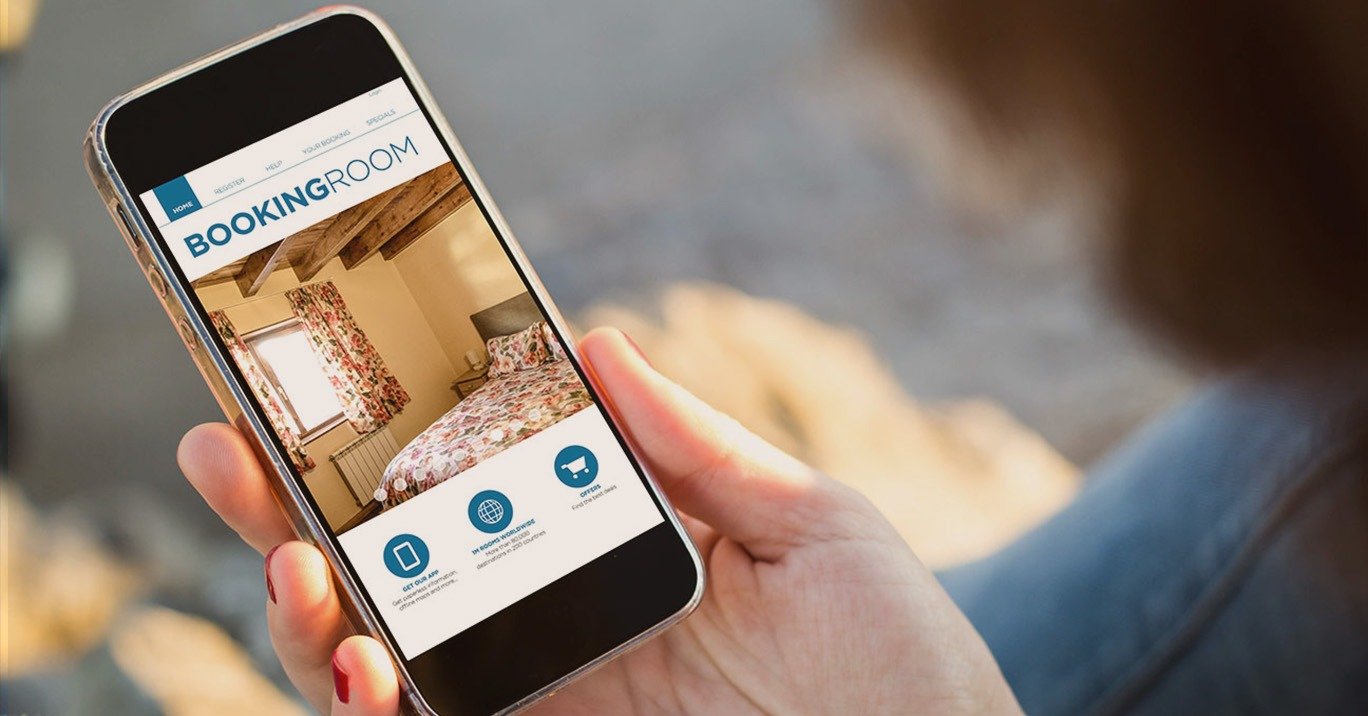
Updated October 2025: This guide now includes mobile management features for hotel owners and staff, alongside guest-facing booking tools.
Recent data shows that mobile is rapidly becoming the dominant channel for hotel bookings. SiteMinder reports that mobile now accounts for nearly 35% of hotel booking revenue (SiteMinder). Meanwhile, ProStay found that 60% of hotel reservations in 2024 were made via mobile devices (ProStay). Even earlier, PhocusWire noted that hotel bookings via mobile had already reached ~29% by Q1 2023 — a share that continues to climb each year (PhocusWire).
But “mobile-friendly” doesn’t just apply to guests. Increasingly, hotel owners and managers rely on mobile tools to manage reservations, update rates, and monitor operations on the go — a trend that’s reshaping how small hotels work day to day.
Table of Contents
📊 Mobile Booking by the Numbers
- 70.5% of global online travel traffic came from mobile devices in 2024 (Navan)
- 60% of hotel reservations in 2024 were made via mobile (ProStay)
- 35% of hotel booking revenue now comes from mobile (SiteMinder)
- 29% of hotel bookings were already on mobile back in Q1 2023 (PhocusWire)
If your booking engine isn’t designed for mobile, you’re quietly losing reservations. Even worse, many hoteliers don’t realize guests abandoned the process until they see yet another commission-heavy OTA reservation pop up in their inbox.
The solution? Invest in a mobile-friendly booking engine that makes it easy for guests to find, book, and pay — all from the palm of their hand.
In this guide, we’ll explain why mobile optimization is critical, what features to look for, and review the top 5 mobile hotel booking engines for small hotels in 2025.
Why Mobile Optimization Matters
Guest Expectations
Today’s travelers expect seamless, friction-free booking. If your booking flow feels clunky — tiny text, too many fields, or pages that don’t fit the screen — they’ll abandon it instantly. And when that happens, OTAs like Booking.com are waiting to scoop up the booking instead.
Booking Abandonment = Lost Revenue
According to Google research, 53% of mobile visitors abandon a site that takes longer than 3 seconds to load (Think with Google). Add in outdated forms or limited payment methods, and your direct booking chances vanish.
Lower Commission Costs
Every guest who books through your website saves you 15–20% in OTA commissions. Multiply that by hundreds of reservations per year, and you’re talking about thousands in profit retained. A mobile-optimized booking engine helps keep those profits where they belong — in your pocket.
Tip: If you’re looking to boost mobile conversion, take a look at our guide on how to improve direct bookings without relying on ads — it’s full of simple, actionable steps you can apply today.
Mobile Isn’t Just for Guests — It’s for Hotel Owners Too
In 2025, a mobile-optimized system isn’t only about smoother guest bookings — it’s about giving hoteliers flexibility and control beyond the front desk.
Small hotel owners, innkeepers, and managers now expect to handle the essentials directly from their phones or tablets. Whether you’re off-site for errands, inspecting rooms, or between properties, a strong mobile interface means you stay in control of daily operations from anywhere.
Here’s how mobile capability supports hotel teams:
- On-the-go access to reservations – Check occupancy, arrivals, and departures from your phone in real time.
- Instant rate and availability updates – Adjust prices or close dates instantly without logging into a desktop.
- Mobile check-ins and payments – Streamline arrivals and collect payments without needing to return to reception.
- Staff coordination – Many systems now let housekeeping and maintenance teams update room status directly from their devices.
- Push notifications and alerts – Get notified when bookings are modified, canceled, or when rooms are ready — reducing communication lag.
Cloudbeds, eZee Absolute, and Little Hotelier are examples of systems offering robust owner-side mobile dashboards. In Cloudbeds’ app, for instance, you can view your reservations calendar, edit rates, and handle payments — all while standing in the lobby or away from the desk. Little Hotelier’s mobile layout is built specifically for owner-operators managing a property hands-on.
For small hotels, this flexibility isn’t a luxury; it’s a real operational advantage. It keeps response times short, improves guest satisfaction, and saves time that would otherwise be spent chasing updates across multiple systems.
If you’re comparing options, look for systems that treat mobile management as core functionality, not an afterthought.
Key Features of a Mobile-First Booking Engine
When evaluating booking software, prioritize these essentials:
- Responsive design – Pages adapt perfectly to any screen size (phone, tablet, laptop).
- Fast loading – Aim for under 2 seconds. Anything slower risks abandonment.
- One-click payments – Apple Pay, Google Pay, PayPal.
- Multi-language + multi-currency – Especially important for properties attracting international guests.
- Upsell opportunities – Offer add-ons like breakfast, parking, or late checkout during the booking flow.
- Self-service tools – Guests can modify or cancel bookings on mobile without calling reception.
- Seamless PMS integration – Ensures bookings made on mobile instantly sync with your property management system, reducing errors, missed reservations, or double-bookings.
For hotel owners and staff:
While mobile booking engines primarily focus on guests, the best systems also give hoteliers on-the-go control. Look for features like mobile dashboards for checking reservations, real-time housekeeping updates, and instant booking alerts. These tools aren’t essential for every property, but they make day-to-day management far smoother when you’re not tied to the front desk.
Alongside these features, data protection is critical. See our article on keeping guest data secure with modern booking systems.
💬 Real Experience
At one hotel I worked in, we learned the hard way how critical mobile-ready systems are. Guests would complete a booking on their phones, receive a confirmation, but our slow back-end system didn’t process it correctly. We had to manually chase down missing reservations — stressful for staff and frustrating for guests. A properly integrated, mobile-first booking engine eliminates that risk by syncing instantly across devices.
Top 5 Mobile-Friendly Booking Engines for Small Hotels in 2025
Here are the best booking engines designed with mobile-first guests in mind. Each one balances ease of use with features that help small hotels thrive.
1. Little Hotelier
Best for: B&Bs and very small hotels
- Clean, intuitive interface built specifically for mobile.
- Guests can confirm a reservation in just a few taps.
- Includes a channel manager to sync availability with OTAs.
- Simple reporting tools help you track direct bookings.
Pros: Easy to use; good support; helps prevent double-bookings via unified calendar
Cons: Limited integrations, lacks advanced CRM or features; pricing for add-ons can accumulate
2. Cloudbeds
Best for: Boutique hotels (20–100 rooms) & medium growth properties
- Mobile-friendly booking engine tightly integrated with PMS and reporting.
- Guests can choose room type, add extras, and pay securely on mobile.
- Powerful features for hotels that want to grow beyond a handful of rooms.
- Strong channel management to balance OTAs and direct sales.
Pros: Strong channel management, real-time inventory updates, good PMS + booking engine integration
Cons: Reporting customization is limited; booking engine flexibility sometimes constrained; performance issues at scale
3. SiteMinder
Best for: Growth-focused hotels with heavy OTA presence and international guests
- Booking engine tightly integrated with SiteMinder’s channel manager.
- Supports multiple currencies and languages, ideal for cross-border travelers.
- Real-time rate and availability updates to all OTAs and your website.
- Reliable for properties where OTA exposure remains important.
Pros: Excellent distribution network, multi-currency and language support, robust integrations
Cons: Can be expensive; complexity for smaller operators; integration / setup friction in some markets
4. eZee Absolute
Best for: Budget-conscious hotels
- Affordable yet includes a solid mobile booking engine.
- Multi-currency support helps with European and global markets.
- Owner’s mobile app makes it easy to manage reservations on the go.
- Great starter option if budget is tight but mobile optimization is essential.
Pros: Affordable pricing; decent core features (PMS + booking engine); mobile app for management
Cons: Less mature in interface, fewer advanced features compared to big players; support and stability may lag
5. ResNexus
Best for: Inns and B&Bs in North America
- Optimized for mobile bookings and direct upsells.
- Emphasis on guest communication (email, text reminders, special offers).
- Strong reputation among U.S. independent properties.
- Less known internationally, but excellent if your guests are primarily domestic.
Pros: Strong guest communications, good mobile booking UI, niche reputation in the U.S. market
Cons: Less recognized globally; fewer integrations or support in some regions; smaller ecosystem
How to Choose the Right Mobile Hotel Booking Software
Not every property needs the same toolset. Here’s a quick guide:
- B&Bs & very small hotels (<10 rooms)
Prioritize ease of use and affordability. Little Hotelier or eZee Absolute usually give everything you need without being overwhelming. - Small boutique hotels (10–20 rooms)
You’re in the middle ground: large enough to benefit from a PMS + channel manager, but still needing simplicity. Consider Little Hotelier if you want easy, all-in-one or Cloudbeds if you need more advanced reporting and upsells. - Boutique hotels (20–100 rooms)
At this size, robust all-in-one platforms like Cloudbeds are the best fit. They offer deeper PMS functions, guest communications, and integrations. - Hotels with many international guests
SiteMinder stands out thanks to its powerful distribution tools and multi-language/multi-currency support. - North American inns & B&Bs
ResNexus caters well to U.S. and Canadian properties, with strong guest communication and upsell features.
Conclusion: Mobile-First = Guest-First
Mobile-friendly booking engines aren’t a “nice-to-have” anymore. They are the baseline expectation in 2025. Without one, you risk abandoned bookings, frustrated guests, and unnecessary OTA commissions.
With the right system, you’ll:
- Capture more direct bookings.
- Reduce admin time.
- Deliver the smooth mobile experience modern travelers demand.
👉 Ready to optimize for mobile? Start a free trial with Little Hotelier, Cloudbeds, or SiteMinder today — and keep more of your hard-earned revenue.
Also see: Best Booking Systems for Small Hotels & B&Bs in 2025
FAQs
Do guests really book hotels on their phones?
Yes — data shows mobile is now the dominant booking channel. ProStay noted that 60% of hotel reservations in 2024 were made via mobile, and SiteMinder records that mobile already generates 35% of booking revenue. Many travelers confirm rooms on the go — during a commute, a lunch break, or even last-minute while traveling. If your booking system isn’t mobile-friendly, you’re missing out on this growing share of bookings.
What happens if my booking system isn’t mobile-optimized?
Guests are likely to abandon the process. Slow load times, poor design, or complicated forms push them toward OTAs like Booking.com, where the experience is smoother. That means fewer direct bookings and more commission costs.
Can mobile booking engines handle payments securely?
Absolutely. Leading systems support Apple Pay, Google Pay, PayPal, and major credit cards. Secure, one-click payment options reduce friction and increase conversions.
Is PMS integration really necessary?
Yes — without it, you risk mismanaged bookings. A guest might receive a confirmation on their phone, but if it doesn’t sync to your PMS in real time, staff may not see it. This can cause overbookings or missed reservations, especially during peak season.