Running a small hotel, guest house or B&B means every booking counts. With travellers increasingly booking on mobile, OTAs taking a substantial share of revenue and guests expecting a smooth experience from reservation to checkout, the system you choose can have a direct effect on both profitability and day-to-day operations.
The right booking system should reduce administration, keep availability accurate across every sales channel and make it easier for guests to book directly.
In this guide, we compare six of the best booking systems for small independent properties in 2026, looking at who each one suits, where it performs well and where its limitations may become apparent.
How we assess hotel software
Hotel Systems Guide considers current product documentation, demonstrations and interface material, independent user feedback where relevant, operational fit and suitability for small independent properties. Read our full review methodology.
Table of Contents
Which Booking System Is Right for Your Property?
Before comparing individual systems, it helps to identify the problems you actually need the software to solve.
💬 Real Experience
When I worked reception in a small hotel in the South of France, we sometimes paid more than 15% commission to Booking.com just to appear higher in search results. It was a constant reminder that the platforms controlled our margins, not us.
For many independent properties the priorities are straight forward:
- making it easy for guests to book on a phone
- keeping rates and availability synchronised across OTAs
- increasing direct bookings where possible
- reducing repetitive administrative work
- giving staff reliable information during busy periods
The best system is not necessarily the one with the longest feature list or the lowest monthly fee. It is the one that fits the way your property operates and removes the most expensive sources of inefficiency. The right choice depends less on the number of rooms you have than on how you sell them, how many booking channels you manage and how much administration you want to automate.
Choose a booking system based on how you operate
| How you operate | Your main priorities |
|---|---|
| Owner-run B&B relying mainly on direct enquiries | Simplicity, affordability and easy setup |
| Independent accommodation selling across several OTAs | Channel manager, booking engine and automated availability updates |
| Small independent hotel | PMS, reporting, staff workflows and integrations |
| Boutique hotel focused on direct bookings and guest experience | Strong branding, a polished booking engine, guest communications and CRM tools |
| Growing multi-property business | Centralised management, scalable reporting, shared inventory and automation across properties |
Do not choose software based on room count alone. A five-room property selling through several international channels may need more sophisticated software than a twenty-room hotel relying on one main source of bookings.
📎Put these priorities into practice. Download the free Hotel System Evaluation Workbook (PDF) to define your operational needs and compare up to three systems side by side.
What Actually Matters When Comparing Booking Systems
Once you have identified how your property operates, compare systems according to the areas that genuinely affect everyday work. Providers may advertise dozens of features, but these are the factors most likely to influence efficiency, revenue and the guest experience.
Most modern platforms combine a PMS, a booking engine, and a channel manager. If you’re not sure how these tools differ, see our guide: PMS vs Booking Engine vs Channel Manager: What Small Hotels Really Need (2025).
Mobile experience
Guests increasingly book on their phones. The booking engine should load quickly, display availability clearly and make it easy to complete a reservation without unnecessary steps.
Channel management
If you sell rooms through Booking.com, Airbnb, Expedia and your own website, rates and availability should update automatically. Reliable synchronisation saves time and reduces the risk of double bookings.
Payment options
Look for secure online payments, automated deposit collection and support for the currencies and payment methods your guests use. Check transaction charges and whether payment tools are included or sold separately.
Guest communication
Automatic confirmations, reminders and pre-arrival messages can reduce repetitive administration while keeping guests informed throughout the booking journey.
Reporting
Occupancy, ADR, RevPAR, booking-source and revenue reports should help you understand where business is coming from and how the property is performing. The most useful system is not necessarily the one with the most reports, but the one that presents information you can act on.
International support
Properties welcoming overseas guests may need multilingual booking pages, multiple currencies, international payment options and connections to regional booking channels.
Reliability and Support
You need to trust the system during your busiest periods. It should keep availability synchronised, process payments consistently and provide knowledgeable support when something goes wrong. Check whether support is available by telephone, chat or email, and whether faster assistance costs extra.
The best booking system is the one that solves the operational problems that matter most to your property. A low subscription may look attractive, but missed bookings, unsold rooms and unnecessary administration can cost far more than the software itself.
Small Hotel Booking Systems Compared (2026)
| System | Best suited to | Why choose it |
|---|---|---|
| Cloudbeds | Growing independent & boutique hotels (typically 20–100 rooms) | Powerful all-round platform with excellent scalability |
| Little Hotelier | Small hotels, B&Bs & guest houses (typically up to 30 rooms) | Simple to use and designed for smaller independent properties |
| Lodgify | Small hotels, B&Bs, guesthouses & rentals with relatively straightforward room, rate and add-on structures | Transparent pricing, strong direct-booking tools and capable channel management |
| SiteMinder | Hotels focused on online distribution | Excellent channel management and booking engine |
| eZee Absolute | International hotels seeking broad functionality and strong overall value | Wide operational suite with regional flexibility, multiple currencies and local integrations |
| ResNexus | Inns & B&Bs, particularly in North America | Strong guest communication and marketing tools |
Room ranges are only a general guide. Operational complexity, staffing, distribution channels and additional services are often more important than the number of rooms.
Why We Don’t List Individual Software Prices.
Hotel software pricing is rarely straightforward. Quotes may vary according to room count, location, contract length and the modules selected, while implementation, payment processing, integrations and transaction fees can change the final cost substantially.
Entry-level plans for straightforward properties may begin at around $60–$100 per month, but more comprehensive setups can cost considerably more. Rather than publish figures that may quickly become outdated or misleading, we recommend narrowing your shortlist first and then requesting personalised quotes for the complete setup your property requires.
For more help evaluating providers, see our guide to choosing the right hotel management system.
Individual Reviews
Cloudbeds — Best for Independent Hotels with More Complex Operations
Overview
Cloudbeds is a leading all-in-one property management and booking platform. It’s trusted by thousands of independent hotels worldwide, making it a top choice for boutique hotels and growing properties with 20–100 rooms.
💬 Real Experience
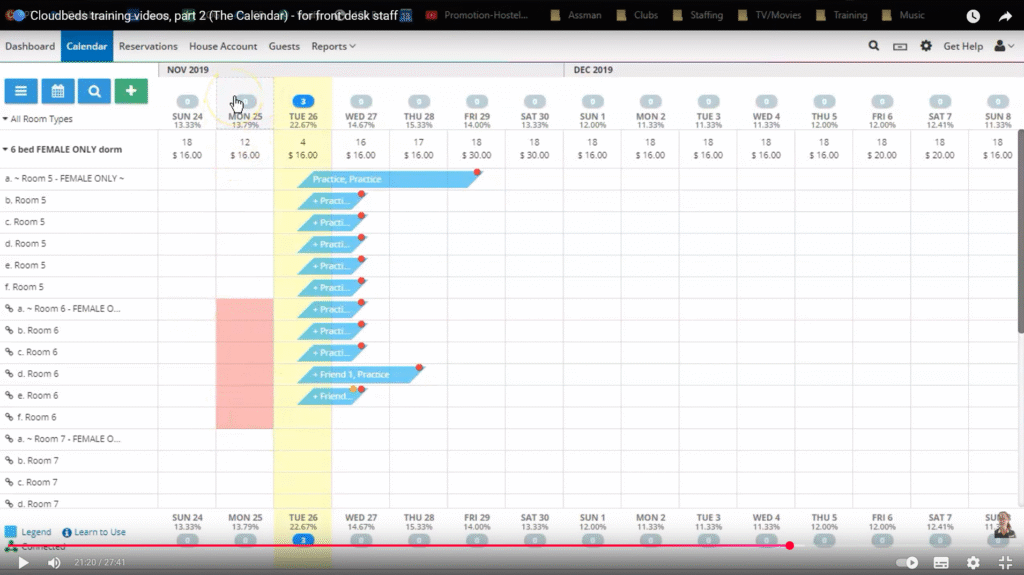
When I worked reception, the morning close-out was one of the most stressful parts of the day. If the night staff had mis-entered even a single booking, reconciling everything could take hours — all while guests were already queuing to check out. Cloudbeds automates these reconciliations in real time, saving staff from exactly the kind of chaos I used to face.
Ease of Use
Cloudbeds is modern and logically organised, but it is designed to handle more complexity than a simple B&B booking calendar. Front-desk teams can manage reservations, room assignments, groups and guest details from the central calendar, while Cloudbeds University and structured onboarding help properties train staff consistently. There is still more to configure and learn than with a system such as Little Hotelier, so very small owner-run properties may find it more extensive than they need.
Reliability
Cloudbeds’ strongest reliability advantage is that reservations, channel distribution and payments are closely connected rather than passed between several unrelated systems. Its channel manager synchronises rates and availability across more than 450 global, regional and niche booking channels, while Cloudbeds Payments can automate deposits, pre-authorisations and scheduled charges.
Support and training are included, although faster response times and telephone support may require Premium Support.
Direct Booking Tools
Cloudbeds’ commission-free booking engine can operate as a standalone booking page or be embedded into a hotel website. Properties can sell packages and extras, use promotional codes, display direct-rate comparisons and track booking-engine performance through Google Analytics. Its newer immersive booking experience keeps guests on the hotel’s own domain from search through to confirmation, creating a smoother and more consistent booking journey.
More advanced services such as websites, CRM, digital advertising and reputation management are available separately, so not every direct-booking tool is included in the core package.
OTA & Channel Management
Channel management remains one of Cloudbeds’ most convincing strengths. Rates, restrictions and availability can be updated across more than 450 channels, including Booking.com, Expedia, Airbnb and Vrbo, with reservations flowing back into the PMS.
Cloudbeds does not add its own commission for bookings delivered through its channel manager, although the OTAs’ usual commissions still apply. Distribution arrangements also vary by package, so properties should confirm whether Cloudbeds’ own channel manager or an external distribution partner is included in their proposed setup.
Reporting & Insights
Cloudbeds covers considerably more than standard occupancy, ADR and RevPAR reports. Properties can examine channel production, booking pace, payments, financial transactions and operational activity, while Cloudbeds Insights allows eligible accounts to build custom reports using selected fields, filters and calculations. Reports can also be scheduled for automatic delivery, and multi-property operators can compare results across locations and currencies.
Some advanced report-building capabilities depend on the account or package, and Cloudbeds has been rolling out updated reporting navigation and infrastructure gradually.
Scalability
Scalability is one of Cloudbeds’ clearest advantages, but growth does not have to mean simply adding rooms. The platform can support multiple properties, larger teams and group business, while newer tools allow hotels to manage meeting rooms, cabanas and other bookable spaces alongside accommodation.
Its marketplace also connects with restaurant POS systems, spa-management platforms and activity tools, allowing related charges and guest information to flow back into the hotel operation. These specialist services are generally handled through integrations rather than Cloudbeds replacing every departmental system itself.
Best Suited To
Cloudbeds is best suited to independent hotels, boutique properties and small hotel groups whose operations involve more than taking room reservations. It becomes particularly valuable when several members of staff use the system, the property sells through numerous channels, payments require automation, group bookings are important or additional services need to connect with the guest folio. Although hotels with approximately 20–100 rooms are likely to find it especially relevant, operational complexity is a better guide than room count. A straightforward owner-run property needing only basic reservations and channel synchronisation may be better served by a simpler platform.
👉 Check out Cloudbeds official site.
Verdict
Cloudbeds is a strong choice for independent hotels that have more moving parts than a basic booking system can comfortably handle. It keeps reservations, channels, payments and reporting closely connected, while its wider platform can extend into group business, bookable spaces and restaurant, spa or activity services through integrations. There is more to configure and learn than with simpler alternatives, and some wider CRM, revenue and marketing tools are optional. But for a hotel looking for fewer workarounds, clearer visibility and a system it is unlikely to outgrow quickly, Cloudbeds is one of the most capable all-round options available.
Read our full Cloudbeds Review for a detailed breakdown of its features, pricing, and key advantages.
Little Hotelier — Best for Small Hotels & B&Bs
Overview
Little Hotelier is one of the most popular booking systems designed specifically for small hotels, inns, and B&Bs. Unlike bigger platforms built for chains, it focuses on simplicity and ease of use — perfect if you’re running a property with 5–30 rooms and want to spend less time on admin.
💬 Real Experience
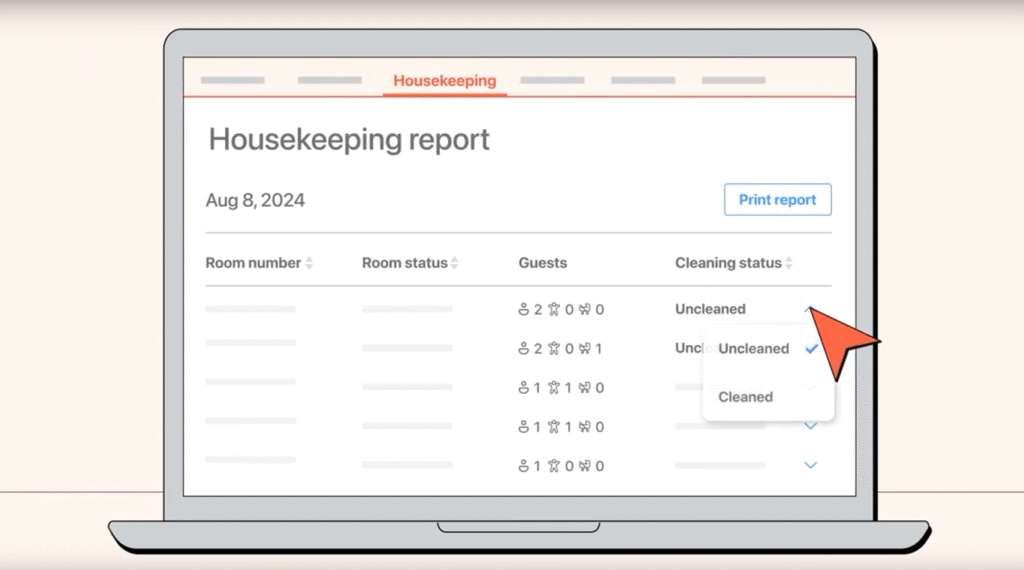
In my hotel days, late check-outs were a constant headache — cleaners would wait around, and new guests often arrived to rooms not yet ready. Little Hotelier’s housekeeping tools update room status in real time, meaning staff always know which rooms are available and which still need attention. It’s exactly the kind of feature that would have saved us endless phone calls and frustration.
Ease of Use
Ease of use is Little Hotelier’s clearest strength. Reservations from your website, connected OTAs and direct enquiries appear in one central calendar, giving owners a straightforward view of arrivals, departures and availability. The mobile app also makes it possible to manage the property away from reception. Its newer pricing and distribution tools introduce more advanced options, but the everyday reservation workflow remains designed for people who do not want to become hotel-software experts.
Reliability
Little Hotelier is powered by SiteMinder, which gives smaller properties access to the same established distribution infrastructure used by much larger hotels. Rates and availability are updated across connected channels whenever a reservation or inventory change occurs, reducing the manual work that often leads to double bookings. Support is available around the clock, although telephone support and some onboarding services depend on the plan selected.
Direct Booking Tools
The integrated booking engine can be added to an existing website or used as a standalone booking page, allowing guests to check availability and reserve directly. It can be customised to match the property’s branding and supports more than 20 languages and 75 currencies—an important advantage for small European hotels and guest houses welcoming international visitors.
Properties can also promote offers and sell extras during the booking process.
OTA & Channel Management
Channel management is one of the strongest reasons to choose Little Hotelier. Its connection to more than 450 booking channels gives small properties broad distribution without requiring a separate enterprise channel manager. Reservations, rates and availability are brought back into the same calendar, making it particularly useful for an owner managing Booking.com, Expedia, Airbnb and direct bookings at the same time. The newer Channels Plus service provides another route to additional channels through a single connection, although separate commercial terms may apply.
Reporting & Insights
Little Hotelier’s reporting is designed to answer practical questions rather than overwhelm owners with data. It covers day-to-day operations, transactions and channel performance, while selected plans add competitor-rate and rate-parity insights.
Recent platform improvements have also introduced access to more sophisticated pricing recommendations through Dynamic Revenue Plus. This makes the system more commercially useful than a basic B&B booking calendar, although larger hotels may still want deeper and more customisable business intelligence.
Scalability
Little Hotelier can support more than one kind of growth. An owner may begin with simple reservation and channel management, then add online payments, a website, guest engagement, metasearch or pricing intelligence as the business becomes more commercially sophisticated.
It remains a platform built primarily for smaller properties, however. Hotels developing complex group business, multiple operational departments or several properties may eventually need a broader PMS.
Best Suited To
Little Hotelier is best suited to owner-run hotels, B&Bs, inns and guest houses that sell through several channels but want to keep daily management straightforward. It is particularly attractive for owners who need to work from a phone, properties welcoming international guests and small teams that cannot devote weeks to software training. It is less suitable for businesses requiring heavily customised reporting, complicated group reservations or close coordination between accommodation, restaurant, spa and other departments.
👉 Visit Little Hotelier site to learn more.
Verdict
Little Hotelier gets the essentials right for people who want to run a small property without spending half the day managing software. Its calendar, booking engine, channel manager and mobile app work together well, while its newer distribution and pricing tools mean it no longer feels limited to the most basic B&B operations. The catch is that some of its more advanced revenue, guest-engagement and support options come with higher plans or additional charges, and properties with several departments or more complicated workflows may eventually outgrow it. For an owner-run hotel, guest house or B&B selling across several channels, however, it remains one of the most practical all-round choices.
For a closer look at Little Hotelier’s tools and pricing, see our complete review.
Want to know how Little Hotelier compares to Cloudbeds? Check out our article Cloudbeds vs Little Hotelier: Best for Small Hotels & B&Bs.
Lodgify — Best for Small Hotels and Rentals
Overview
Lodgify is a property-management and direct-booking platform for vacation rentals and smaller independent accommodation businesses, including B&Bs, guesthouses and small hotels. It combines reservations, channel management, guest communication, payments, reporting and a direct-booking website in one system.
Ease of Use
The interface is visually straightforward, with reservations, blocked dates and nightly rates managed from a central calendar. Free 1:1 onboarding is available, and existing Airbnb listings can be imported rather than rebuilt manually.
Direct Booking Tools
Direct booking is one of Lodgify’s main strengths. Owners can create a customised website using its no-code builder or add Lodgify’s booking tools to an existing site. Guests can check availability, select accommodation, add extras and pay online.

Channel Management
Lodgify connects directly with Airbnb, Booking.com, Vrbo and Expedia, with additional channels available through iCal. Rates, availability and reservations can be managed centrally, while channel-specific mark-ups can be applied where needed. If you’re deciding whether this functionality matters for your property, see our guide to channel managers for small hotels and B&Bs.
For Small Hotels & B&Bs
Hotels can list distinctive rooms individually or group similar rooms into room types using Lodgify’s Bookable Units app. This gives small hotels and B&Bs flexibility, although the rental-based structure works differently from a conventional hotel PMS.
Best Suited To
Small hotels, B&Bs, guesthouses, cabins, cottages and vacation rentals wanting strong direct-booking and channel-management tools without an overly complex system.
👉 Explore Lodgify plans and pricing on their website
Verdict
Lodgify is particularly strong for small independent properties that want to combine their own website with direct bookings, OTA distribution and everyday property-management tools. Its vacation-rental roots remain visible, but it is also a credible option for straightforward small-hotel and B&B operations.
Read our full Lodgify Review (2026)
SiteMinder — Best for Hotels Focused on Distribution & Revenue
Overview
SiteMinder is best understood as a hotel distribution and revenue platform rather than a traditional all-in-one PMS. It connects a property’s rates and availability to hundreds of booking channels while adding direct-booking, metasearch and revenue-management tools. This makes it particularly valuable for hotels whose main challenge is attracting demand, managing a complicated channel mix and selling rooms at the right price.
💬 Real Experience
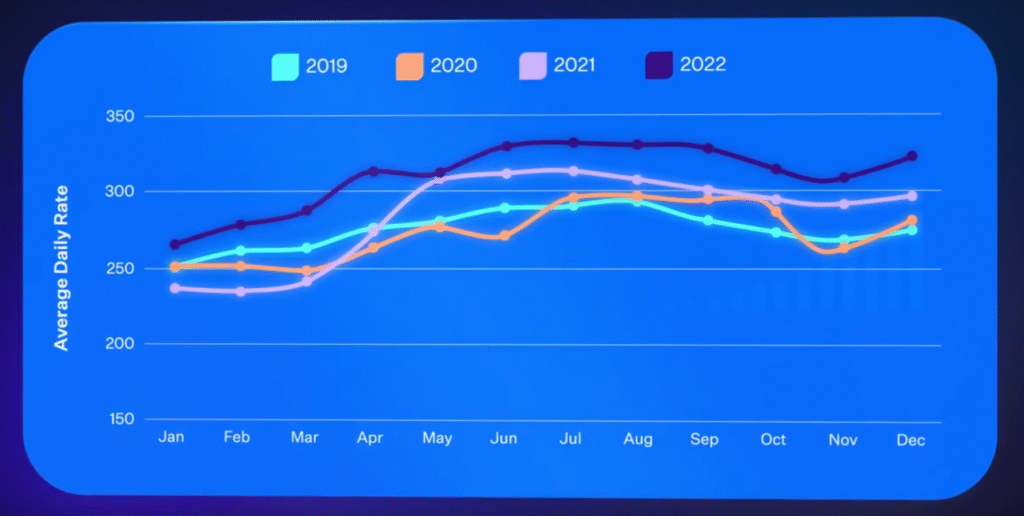
When I worked reception, I regularly entered guest invoice figures into Excel so management could monitor the hotel’s performance. During the quieter months it was manageable; in high season, it meant taking time away from guests when every minute at the desk mattered.
SiteMinder would not replace a PMS or accounting system for complete financial reporting, but it can reduce the manual work involved in tracking booking pace, channel production and revenue trends.
Ease of Use
SiteMinder is straightforward once channels, rates and room types have been configured, although the initial mapping can require care. Because it normally works alongside a PMS, reception and housekeeping teams will usually continue using their existing operational system while SiteMinder manages distribution and commercial performance.
Reliability
Distribution is where SiteMinder has built its strongest reputation. Rates, restrictions and availability are synchronised across connected booking channels, while new reservations flow back into the hotel’s PMS. This reduces repetitive manual updates and gives operators greater confidence that consistent inventory is being shown across their sales channels.
Direct Booking Tools
SiteMinder’s booking engine can be added to an existing website or used as a standalone booking page. It can reflect the property’s branding, supports international guests and allows hotels to promote offers, packages and extras. Wider direct-booking services such as websites and metasearch are also available, although these may depend on the package selected.
OTA & Channel Management
Channel management remains the strongest reason to choose SiteMinder. It connects hotels with hundreds of global, regional and specialist booking channels, allowing rates and availability to be controlled from one place. This is particularly valuable for properties selling internationally or using niche channels alongside major OTAs such as Booking.com and Expedia.
Additional distribution services can also make it easier to test new channels, although these may use different commission or fee arrangements from standard OTA connections.
Reporting & Insights
SiteMinder’s reporting is strongest on booking pace, channel production, competitor rates and market demand rather than detailed hotel accounting. Dynamic Revenue Plus adds daily pricing recommendations based on property performance and wider market conditions, making revenue management more accessible to hotels without a dedicated specialist.
For a clearer explanation of automated pricing recommendations and manual rate strategy, see our guide to dynamic pricing for small hotels.
Scalability
SiteMinder can grow with a hotel’s distribution strategy. A property may begin with channel management and later add direct-booking, metasearch and revenue tools as its commercial needs become more sophisticated. Its broad integration network also gives hotels flexibility to change or expand the surrounding technology without replacing the entire setup.
For small groups, SiteMinder can centralise rates and distribution across several properties, even where individual hotels use different PMS platforms. Its scalability is therefore strongest on the sales and revenue side of the business.
Best Suited To
SiteMinder is best suited to independent hotels and small hotel groups that rely heavily on online distribution. It is especially useful for properties selling through numerous international or regional channels, strengthening their direct-booking strategy or seeking better information about booking pace, competitor rates and market demand.
It is also a strong choice for hotels that are satisfied with their current PMS but want better commercial tools around it. An owner-run property looking primarily for one simple calendar covering reservations, housekeeping and daily operations may find an all-in-one platform easier to manage.
👉 Explore SiteMinder on their website.
Verdict
SiteMinder makes the most sense when your challenge is not simply managing reservations, but deciding where to sell your rooms and at what price. Its channel manager remains the star of the platform, while the booking engine and newer revenue tools give hotels more control over direct sales and market performance. It will normally need to work alongside a PMS, and optional products can make the complete setup more involved. But for an independent hotel or small group that takes distribution seriously, SiteMinder is one of the strongest platforms available.
See our in-depth SiteMinder Review for full details on setup, features, and support.
For a deeper look at scalability and growth potential, see Cloudbeds vs SiteMinder: Which System Scales Better for Growing Hotels?
Yanolja Cloud Solution / eZee Absolute — Best Value for International Hotels
Overview
The eZee product suite appeals to cost-conscious hotels because it offers a broad range of operational tools without positioning itself purely as a premium platform. Its wider ecosystem can cover reservations, channel management, direct bookings, payments and restaurant operations, allowing properties to replace several disconnected systems with one provider.
The final price depends on the products selected, so it should not automatically be assumed to be the cheapest option. For international hotels needing broad functionality, regional flexibility and round-the-clock support, however, it can offer strong overall value.
Ease of Use
The eZee product suite covers more operational ground than a lightweight booking calendar, so there is more to configure and learn. Once set up, staff can manage reservations, room allocation, housekeeping, billing and payments from one central system, while the mobile app gives owners useful control away from reception.
It is best suited to properties willing to invest some time in setup rather than those wanting the simplest possible plug-and-play solution.
Reliability
Yanolja Cloud Solution’s eZee ecosystem is designed for hotels operating across different regions, currencies and payment environments. Round-the-clock support and implementation assistance are reassuring for properties that cannot wait until the next business day when something goes wrong. Because the wider setup may involve several connected eZee products, hotels should confirm that the required modules, integrations and local payment options are included in the proposed package.
Direct Booking Tools
The eZee product suite booking engine can be added to a hotel website and used to sell rooms, packages and additional services. Support for multiple languages, currencies and payment gateways makes it particularly relevant to international properties welcoming guests from several markets. As the booking engine forms part of the wider eZee suite, buyers should confirm whether it is included in their quote.
OTA & Channel Management
The eZee Centrix channel-management tools synchronise rates and availability across major international and regional booking channels, with reservations feeding back into the hotel system. This can save considerable time for properties selling through several OTAs and reduce availability errors caused by manual updates. Hotels relying on specialist or local channels should still check that the required connections are available.
Reporting & Insights
The eZee product suite provides operational reports covering reservations, occupancy, revenue, housekeeping, guest activity and financial transactions. This gives owners a useful overview without relying on manually maintained spreadsheets. The reporting covers a broad range of operational needs, while hotels requiring highly specialised BI or cross-system analytics may still prefer a dedicated analytics platform.
Scalability
Yanolja Cloud Solution’s eZee product suite can grow with a property as it adds channel distribution, direct bookings, restaurant POS, revenue tools, accounting connections and guest self-service. It can also support several properties, although the setup becomes more modular as additional products are introduced.
Best Suited To
The eZee product suite is best suited to independent hotels, resorts and small groups that need broad operational functionality while remaining conscious of overall value. It is particularly worth considering for international properties handling several currencies, local payment methods, restaurant operations or regional requirements.
It may be less suitable for a small owner-run B&B seeking the simplest possible calendar, or for a hotel that prioritises highly polished analytics and extensive report customisation. Its main appeal is the amount of practical hotel functionality available through one wider ecosystem.
👉 Learn more about the eZee product suite.
Verdict
Yanolja Cloud Solution’s eZee product suite is a practical choice for cost-conscious hotels that need more than a basic reservation tool. Its wider platform can bring front-desk operations, distribution, direct bookings, payments and restaurant services together, while its international reach makes it particularly useful where local currencies, payment methods and regional requirements matter. The setup can become more modular as additional products are added, but for hotels that will use its breadth, the value lies in reducing manual work and helping more of the business run efficiently—not simply in paying the lowest monthly fee.
Discover whether the eZee product suite could be a better fit for your property in our detailed review.
If you are weighing up simplicity against overall value, check out the Little Hotelier vs eZee Absolute comparison.
ResNexus — Best for North American Inns & B&Bs Focused on Guest Relationships
Overview
ResNexus is an all-in-one property management and booking platform with strong roots among independent inns and B&Bs in North America. Alongside reservations, front-desk management and housekeeping, it includes direct-booking, guest communication, marketing and upselling tools. Its main appeal is helping smaller properties manage both the stay and the relationship with the guest through one provider.
Ease of Use
ResNexus is generally straightforward for everyday tasks such as entering reservations, checking in guests and updating room status. Its mobile app also allows owners to manage bookings and housekeeping away from reception. The breadth of the system means some advanced settings take time to learn, and recent users have expressed mixed views about changes to the calendar and grid layouts.
Reliability
Website, telephone and connected OTA bookings are brought into one calendar, reducing manual updates and availability errors. ResNexus also stands out for live telephone support, which is particularly valuable to owner-operators who want to speak to someone when an urgent problem occurs. Some users report occasional technical glitches, but support remains one of the platform’s most consistently praised strengths.
Direct Booking Tools
Direct bookings are one of ResNexus’s clearest strengths. Its booking engine can display rooms, packages, promotions and extras, while cart-abandonment emails encourage guests to return and complete unfinished reservations.
Automated marketing emails, gift certificates and a guest portal also help properties communicate with guests and generate additional revenue before and during the stay.
OTA & Channel Management
ResNexus connects with major channels including Booking.com, Expedia, Airbnb and Vrbo, with rates and availability managed from the central system. This should cover the main channels used by many North American inns and B&Bs, although its distribution network is less extensive than SiteMinder or Cloudbeds. Properties relying on specialist or regional channels should confirm that the connections they need are available.
Reporting & Insights
ResNexus provides reports covering reservations, occupancy, payments, revenue, guest activity and marketing performance. Its analytics and rate tools should be sufficient for most independent inns, although properties wanting highly customisable dashboards or deeper business intelligence may find larger platforms more flexible
Scalability
ResNexus can support a property as it introduces online payments, contactless check-in, dynamic pricing, automated door access and more sophisticated guest communications. Its group-booking tools are also useful for inns and small hotels hosting weddings, retreats and family gatherings.
It is broad enough for a busier property with more guest services, although operators wanting only a simple reservation calendar may find they are paying for functionality they do not need.
Best Suited To
ResNexus is best suited to independent inns, B&Bs, lodges, guest houses and smaller hotels in North America that want to strengthen direct bookings and maintain a personal relationship with guests. It is particularly attractive for owner-operators who value live support and want built-in tools for packages, upselling, automated emails and repeat marketing.
It may be less suitable for properties requiring numerous regional OTA connections outside North America, highly customisable reporting or the simplest possible booking system.
Verdict
ResNexus is a strong choice for North American inns, B&Bs and small hotels that want to build direct bookings and maintain a personal relationship with guests. Its communication, marketing and upselling tools can help generate more revenue before, during and after each stay, while access to knowledgeable support is reassuring for owner-operators. It may not offer the broadest international distribution network, but for smaller accommodation businesses focused on guest service and repeat business, it is a practical and well-matched solution.
Learn more about ResNexus in our full review.
Hotel Booking System Costs: What Small Hotels Can Expect
Hotel software pricing is rarely limited to one monthly subscription. The final cost may depend on the number of rooms, the modules selected, your region, payment volume and contract terms. Booking engines, channel management, onboarding, phone support and integrations may be included in some packages but charged separately in others.
Entry-level systems for straightforward properties may begin at around $60–$100 per month, while more comprehensive setups can cost considerably more. Always request a personalised quote covering the full combination of tools your property expects to use.
The cheapest system is not always the least expensive to run. Empty rooms, missed direct bookings and inefficient workflows can cost far more than the monthly software fee.
Looking to reduce distribution costs? Our guide to increasing direct hotel bookings explains practical ways to generate more commission-free reservations.
Best Booking Systems for Small Hotels & B&Bs: Our Picks
- Little Hotelier: best for owner-run hotels, B&Bs and guest houses that prioritise simplicity.
- Cloudbeds: best for independent hotels with more complex operations, staff workflows and integrations.
- Lodgify: best for small hotels, B&Bs and rentals wanting strong direct-booking tools, channel management and an easy-to-manage website.
- SiteMinder: best for hotels focused on distribution, direct bookings and revenue performance.
- Yanolja Cloud Solutions / eZee Absolute: best value for international hotels needing broad functionality and regional flexibility.
- ResNexus: best for North American inns and B&Bs focused on direct bookings and guest relationships.
Room count is still useful as a rough guide, but your staffing, channel mix, guest services and reporting needs should carry more weight.
Final Thoughts: Choosing the Right Booking System
The right booking system should make the property easier to run. It should reduce repetitive administration, keep availability accurate, support direct bookings and give staff reliable information during busy periods.
Before deciding, shortlist two or three systems and ask each provider to demonstrate the workflows that matter most to your property. Test realistic tasks such as changing a reservation, collecting a deposit, updating several OTAs, closing a room or adding an extra to a guest account.
Choose the system that fits the way you operate today while leaving enough room for the business to become busier or more sophisticated.
Things to Watch Out For in Hotel Booking Systems
Not every “all-in-one” booking system lives up to its promises. Here are the red flags to look out for when evaluating providers:
1. An incomplete quote
Personalised pricing is not necessarily a warning sign, but the provider should clearly explain what is included. Ask about onboarding, payment processing, booking fees, support, integrations and optional modules.
Ask: What will our complete monthly and one-off costs be for the setup demonstrated today?
2. Vague limits and package wording
Terms such as “unlimited users,” “all-in-one” or “unlimited bookings” may still come with conditions.
Ask: Are there limits on users, channels, transactions, messages, properties or support?
3. Support that does not match your needs
“24/7 support” may mean email or chat rather than immediate telephone assistance. Check the available channels, response times and escalation process.
💬 Real Experience: When I worked reception, even a short system problem could leave a queue of frustrated guests. During those moments, fast and knowledgeable support mattered more than another feature.
4. Weak everyday workflows
A system may look impressive in a sales demonstration but still be slow or awkward during routine tasks. Test it on the phones, tablets and computers your staff will actually use.
Ask the provider to demonstrate:
- changing a reservation
- updating room status
- processing a payment
- closing inventory
- exporting a report
5. Poor data portability or shallow integrations
Confirm that you can export reservations, guest records and financial data in a usable format if you leave. Also verify that important integrations exchange the information you need rather than merely appearing on a marketplace page.
Ask: Who supports the integration when something fails, and what data moves in each direction?
Bottom Line
Look beyond the feature list and headline subscription. Reliability, total cost, support, data portability and the quality of everyday workflows will usually matter more than the number of tools advertised.
How We Reviewed These Booking Systems
We assessed each platform using current product documentation, help-centre resources, recent product updates, demonstrations where available and relevant user feedback. The comparison focuses on how each system supports real hotel operations, informed by firsthand experience of working in hotel reception.
Rather than recommending software by room count, advertised price or feature volume alone, we considered operational fit: staffing, booking channels, guest communication, payments, reporting, integrations and the amount of administration each property needs to manage. We do not claim hands-on use of a platform unless this is explicitly stated.
FAQs About Small Hotel & B&B Booking Systems
Q: What’s the best hotel booking system for small hotels & B&Bs?
There is no single best system for every property. Little Hotelier is particularly well suited to owner-run B&Bs and guest houses, Cloudbeds to independent hotels with more complex operations, Lodgify to small hotels, B&Bs and rentals wanting strong direct-booking tools and channel management, SiteMinder to properties focused on distribution and revenue, eZee Absolute to international hotels seeking broad functionality and ResNexus to North American inns focused on direct bookings and guest relationships.
The right choice depends more on how you operate than on room count alone.
Q: How much does a hotel booking system cost?
Pricing varies according to property size, room structure, region, contract terms and the modules selected. Entry-level systems can start from around $15–$30 per month, while more comprehensive hotel platforms commonly cost $60–$100+ per month and can rise considerably with advanced distribution, payments, reporting or additional integrations.
Always ask for a complete quote that includes onboarding, payment processing, booking fees, support and any optional products you expect to use.
Q: What’s the difference between a PMS, booking engine, and channel manager?
– A property management system (PMS) handles daily operations such as reservations, check-ins, room assignments, housekeeping and guest accounts.
– A booking engine allows guests to check availability and book directly through the property’s website.
– A channel manager synchronises rates and availability across OTAs such as Booking.com, Expedia and Airbnb.
Many modern platforms combine all three, although some—such as SiteMinder—are designed primarily to work alongside an existing PMS.
Q: Can I integrate a booking system with my POS or accounting software?
Many platforms connect with restaurant POS systems, accounting software, payment providers, housekeeping tools and guest-communication platforms. However, the depth of each connection varies.
Before buying, confirm exactly what information moves between the systems, whether the integration works in your region and which company provides support if the connection fails.
Q: Do hotel booking systems ever go down?
Yes. Even established cloud platforms can experience outages, connection problems or interruptions affecting individual channels or integrations.
Ask providers about system monitoring, service-status updates, support response times and what staff can still do if the platform or internet connection becomes temporarily unavailable. Avoid assuming that every system includes a complete offline mode.
Q: Can I switch booking systems easily if I’m not satisfied?
Yes, but switching requires planning. Guest records, future reservations, rates, room types and financial information may need to be exported, cleaned and imported into the new platform. Staff will also need training, and OTA connections must be remapped carefully.
Q: Do hotel booking systems work on mobile devices?
Most modern systems provide either a mobile app or a mobile-friendly dashboard. Depending on the platform, owners and staff may be able to view reservations, update availability, change room status, adjust rates or process payments from a phone or tablet.
Test the actual workflows you expect to use. Being able to view a dashboard on mobile is not the same as being able to manage the property effectively from it. The same applies to the guest booking journey: a booking engine may technically be mobile-responsive while still introducing friction through forms, navigation or information presentation.
HSG’s Hotel Booking Engine Study looked at these issues across 42 observed mobile booking journeys.
Q: How long does it take to set up a booking system?
A straightforward property with a small number of room types and channels may be ready within a few days. More complicated setups involving multiple rate plans, payment rules, integrations, historical data and staff training can take several weeks.
The quality of the preparation matters as much as the software. Before implementation, make sure your room types, rates, policies, taxes, guest emails and OTA accounts are accurate and up to date.
Q: Can a booking system help reduce OTA commissions?
A booking system cannot remove OTA commissions by itself, but a strong booking engine can make it easier for guests to reserve directly. Promotional codes, packages, metasearch visibility, automated guest communication and repeat marketing may also help increase the proportion of direct bookings over time.
OTAs can still provide valuable reach, so the goal is usually to create a healthier balance between direct and third-party reservations rather than eliminate them entirely.
Q: Is a channel manager necessary for a small B&B?
Not always. A property relying mainly on direct enquiries or one booking channel may be able to operate without one.
However, once rooms are sold through several OTAs and the property’s own website, automatic synchronisation becomes much more valuable. Even a five-room guest house may need a channel manager if it sells the same inventory across Booking.com, Airbnb and direct channels.
Related Guides
HSG Research
Choosing and Comparing Hotel Software
- Hotel Booking System Reviews and Comparisons
- PMS vs Booking Engine vs Channel Manager: What Small Hotels Really Need
- Channel Manager: Do Small Hotels and B&Bs Need a Channel Manager?
- Why Mobile-Friendly Booking Systems Are Essential for Small Hotels
- How Modern Hotel Booking Systems Keep Guest Data Secure
Increasing Direct Bookings